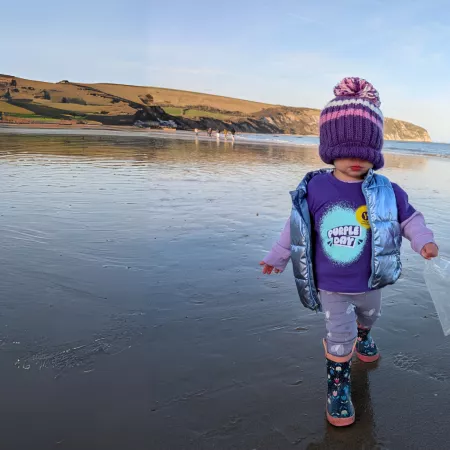
Every year on 26 March, people around the world wear purple, decorate their schools and workplaces, and share photos online for Purple Day. But why purple? What’s the story behind the colour that has become such a powerful symbol of epilepsy awareness?
The answer begins with one young girl and a simple idea that grew into a global movement.

The beginnings of Purple Day
Purple Day was founded in 2008 by Cassidy Megan, a young girl from Nova Scotia who was living with epilepsy. Like many children with the condition, Cassidy sometimes felt isolated and misunderstood, and there was a lot about epilepsy she didn’t know.
She wanted people to talk more openly about epilepsy, so that no one would feel alone or ashamed of their diagnosis.
Cassidy chose purple as the colour for the day. Partly, it was her favourite colour but it also carried deeper meaning. Over time, that choice helped shape a shared identity for people affected by epilepsy across the world.
What purple represents
A lighter shade of purple, lavender, has long been associated with epilepsy. The lavender flower has often been used as a symbol for things that are hidden or overlooked. For many people with epilepsy, this reflects real experiences - seizures that happen out of sight, conditions that are misunderstood, and sometimes isolation because of fear and stigma.
Purple and lavender are also linked with calm and compassion. These associations matter. Epilepsy can be unpredictable and frightening, not just for the person experiencing seizures but for their families too. The colour purple helps communicate care, understanding and hope.
Cassidy has also spoken about how the many shades of purple represent the wide variety of seizure types and personal experiences within the epilepsy community. No two people experience epilepsy in the exact same way and purple reminds us of that diversity.
Why shared symbols matter
Wearing purple might seem like a small action, but shared symbols are powerful. When people wear purple on Purple Day, they make epilepsy visible. They show that it’s okay to talk about seizures, to ask questions, and to learn.
For someone living with epilepsy, seeing purple in a classroom, office or community space can be reassuring. It says: you are not alone.
For families, it’s a sign of solidarity. For children, it can open conversations that replace fear with understanding.
This year, we are encouraging our supporters to use the purple heart emoji across their social media to spread awareness and help stop the fear of seizures.

Small actions, real impact
You don’t need to be an expert to make a difference. Simply wearing purple, sharing a photo, or explaining why the day matters can help challenge stigma and build awareness.
These small acts add up and they help people affected by epilepsy feel seen, supported and understood.
Get involved this Purple Day
This 26 March, join the purple movement:
Wear purple at school, work or home
Share why you’re taking part on social media
Get involved in Purple Day activities or fundraising
Purple isn’t just a colour. It’s a symbol of visibility, solidarity and hope. Together, we can help make the world more understanding for everyone affected by epilepsy.