This month, four members of our research team represented Young Epilepsy at the 16th European Epilepsy Congress in Athens, one of the most significant events in the international epilepsy research calendar. The congress brings together leading clinicians, researchers and organisations from around the world to share evidence, challenge thinking and shape the future of epilepsy care.
The range of presentations highlights how Young Epilepsy is contributing to research across diagnosis, treatment, wellbeing and education, helping to build the evidence that can improve outcomes for children and young people with epilepsy.

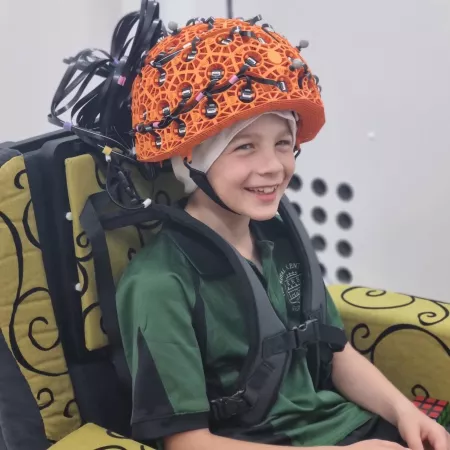
Christine Embury, Postdoctoral Research Fellow, and Zelekha Seedat, Neurophysiological Scientist, presented findings from our pioneering OPM-MEG research. Developed in partnership with organisations including UCL, Great Ormond Street Hospital and Cerca Magnetics, OPM-MEG is the world's first wearable brain-imaging system. The technology has the potential to improve epilepsy diagnosis and support treatment decisions by providing more precise information about where seizures begin in the brain.

Abbie Wooldridge, Senior Assistant Psychologist, presented preliminary findings from our Turning6 study, a long-term project following children who developed epilepsy in infancy. The research is helping us better understand how epilepsy affects children's development, emotional wellbeing, mental health and education as they grow older, with the aim of identifying opportunities for earlier diagnosis and intervention.

Joe Paternoster, Assistant Research Psychologist, presented research exploring the experiences of young people with epilepsy in higher education, helping to improve understanding of the challenges students can face and the support needed to help them thrive.
Alongside sharing their own findings, the team exchanged ideas with international experts, explored emerging innovations including the potential role of AI in diagnostic pathways, and developed new connections across the global epilepsy community.
Athens is just one of several national and international conferences where Young Epilepsy researchers have presented their work this year, including MEG UKI and other specialist scientific meetings. Together, these opportunities help ensure that research informed by the experiences of children, young people and families contributes to the evidence base shaping future epilepsy care.
Because research only changes lives when it is shared, challenged and translated into better outcomes for the people who need it most.
Every breakthrough starts with research. If you'd like to help us develop better diagnostics, improve treatments and create better futures for children and young people with epilepsy, please consider supporting our research.