Young Epilepsy has been awarded a grant to explore how OPM-MEG, a form of quantum brain sensing technology, could help make epilepsy diagnostics more accessible for children living with autism and epilepsy.
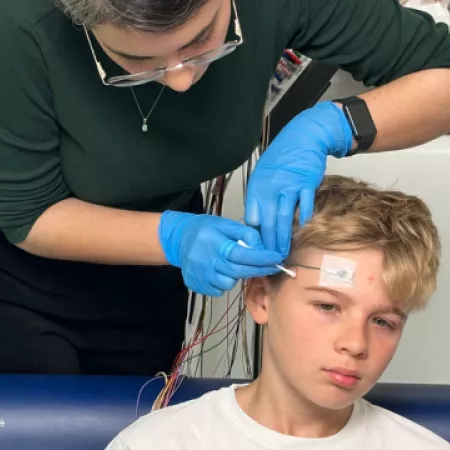
The project will focus on adapting OPM-MEG equipment for children who have previously found EEGs difficult or have been unable to complete them.
For some children, the sensory experience of an EEG can be challenging. This can make it harder to access the tests needed to support a diagnosis and plan care. This project aims to explore whether OPM-MEG could offer a more comfortable and accessible alternative for those children.
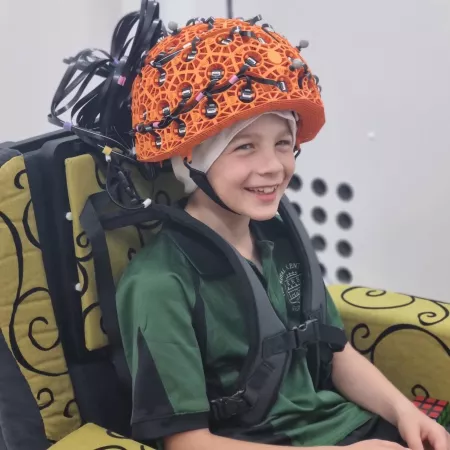
OPM-MEG is a non-invasive brain scanning technology that uses quantum sensors to measure brain activity. Unlike EEG, it does not require gel or paste, and can allow for natural movement during the scan. The equipment can also be adapted to better suit children’s individual needs.
Through this project, the research team will focus on improving the design and usability of the equipment, including adapting flexible helmets and refining how it is used in practice. The aim is to make the experience more tolerable for children while supporting clearer, high-quality clinical information.
The project is being led by Dr Christine Embury and Dr Zelekha Seedat at Young Epilepsy, in partnership with Cerca Magnetics, ANT Neuro and UCL. The collaboration also includes Prince of Wales' Chair of Childhood Epilepsy for ICH, GOSH, UCL and Young Epilepsy Professor Helen Cross, Professor Arjan Hillebrand at VUMC and Lindsay Randall, Head of the SLC6A1 charity, who will lead on patient and public involvement to help ensure the work is shaped by the experiences of children, young people and families.
Meet the OPM Meg research team
Dr Christine Embury said:
“This project is about listening to children and families, and asking how diagnostic tests can work better for those who currently face the biggest barriers. For some children, EEGs can be very difficult to tolerate. We want to explore whether OPM-MEG can offer a more comfortable and accessible way to support diagnosis.”

Dr Zelekha Seedat said:
“We’re excited to bring together clinical expertise, new technology and lived experience to focus on a group of children who are too often underserved. By adapting both the equipment and the analysis around children’s needs, we hope to build evidence for a more accessible diagnostic approach.”
At Young Epilepsy, we are committed to helping children and young people access the diagnosis, treatment and support they need. This project is an important step towards making that possible for those who face additional challenges in accessing care.