Jamie was diagnosed with epilepsy last year at the age of 10. For his family, the past year has been defined by how rapidly his seizures changed and escalated, and how deeply that affected every part of daily life.
“The thing that stands out most for us over the past year is the change in seizures Jamie had,” says his mum, Laura. “Realising this was a life changing diagnosis for Jamie was overwhelming, so finding Young Epilepsy was the best thing to happen for us.”
Jamie’s epilepsy began with absence seizures. At first, they were brief moments where Jamie would appear vacant, often unnoticed. Over time, these seizures became increasingly frequent. At their worst, Jamie was experiencing between 80 and 100 absence seizures a day, leading to repeated hospital stays and serious concern for his safety.

“We knew things were escalating when the seizures kept changing and increasing,” Laura explains.
Over the following months, Jamie’s seizures continued to evolve. His absence seizures progressed into focal seizures, which became more dangerous and unpredictable. Then, towards the end of summer last year, Jamie experienced his first tonic-clonic seizure.
“This was the most traumatic thing to see your child have,” says Laura. “You feel completely helpless and every second feels like an hour.”
After this, Jamie’s tonic-clonic seizures became more frequent, leading to further hospital stays and repeated changes in medication. As the seizures worsened, Jamie lost a significant amount of independence. He needed increased supervision at school and constant care and attention at home.
“This took so much independence away from Jamie,” Laura says. “We had to change our lifestyle, jobs and daily routines to support him. As a family, it really was a life changing diagnosis.”

Medication has been one of the toughest parts of Jamie’s journey. Over time, he has had to try many different medications to help control his seizures. Alongside seizure management, Jamie has lived every day with difficult side effects including migraines, sickness and extreme tiredness.
“It’s been hard for Jamie having to take and try so many different medications,” Laura explains. “The side effects meant days off school, days in hospital and not being able to do lots of the things he loves, like football.”
Laura wishes more people understood that epilepsy is not just about seizures.
“The medication has so many side effects,” she says. “Memory was a massive thing for Jamie, as well as processing. It can really hinder learning and development, and dealing with medication has been such a big part of the epilepsy journey.”
As Jamie’s tonic clonic seizures began, his independence reduced even further. School life changed dramatically, but support from friends made a crucial difference.

“Family and friends quickly got to know about Jamie’s symptoms and seizures,” Laura says. “That made going to school easier. His friends were his absolute rock and they still are.”
Life now looks very different for Jamie and his family. Everyday activities require careful planning around tiredness, emergency medication and safety. Holidays and days out involve constant risk assessing to ensure Jamie’s wellbeing.
“This year has taught us that family and friendship support is everything,” Laura says. “Letting people support you and continuing life as best you can has been so important.”
Jamie has had to grow up very quickly. At first, he struggled with feeling different and alone, but over time he has become more accepting of his diagnosis.
“At first, Jamie saw himself as different, like he was the only one,” Laura explains. “But one thing that never changed was how his friends saw him. He is still Jamie. When I see him with his friends or his little brother, it reminds me that he is still a child, even though he puts on such a brave face.”

The impact of epilepsy has been felt by the whole family, including Jamie’s younger brother Thomas.
“We are incredibly proud of Jamie, how far he has come and how he deals with the challenges of daily life,” says Laura. “And we are so proud of Thomas too. Sometimes he doesn’t see his brother much because of hospital stays, but he is so caring and calm. He loves helping Jamie and gives him lots of cuddles.”
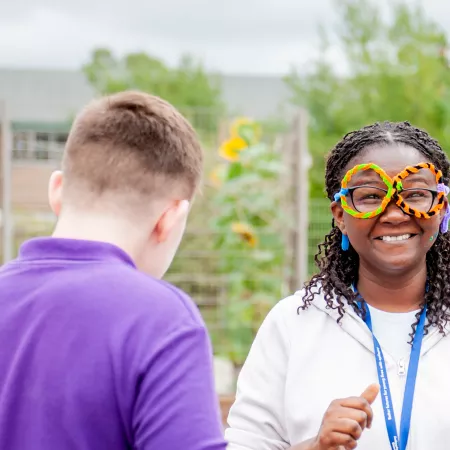
Support from friends and family has been vital, but Young Epilepsy has been the biggest source of support outside the family. Through the charity’s self referral service, Jamie was matched with Stephen, one of Young Epilepsy’s Youth Support Coordinators
“Being able to talk to Stephen about anything was so important to Jamie,” Laura says. “He felt listened to and understood. That support network has been vital over the last year and has really lifted him on his hardest days.”
On the most difficult days, Jamie knows he can pick up the phone and talk to Young Epilepsy, or lean on friends and family who accept and understand him. Being part of a football team that includes him means everything.

“Football lets him do what he loves and forget everything else,” Laura says. “Scoring goals, taking corners and free kicks, it gives him that freedom.”
Looking ahead, Jamie and his family hope epilepsy becomes better understood worldwide, that children are educated about it from a young age, and that Jamie continues to thrive. Their family motto says it all: never change Jamie, always be you.
Now, as Young Epilepsy’s CarFest Ambassador for 2026, Jamie is using his voice to raise awareness, share his journey, and remind other children living with epilepsy that they are not alone.